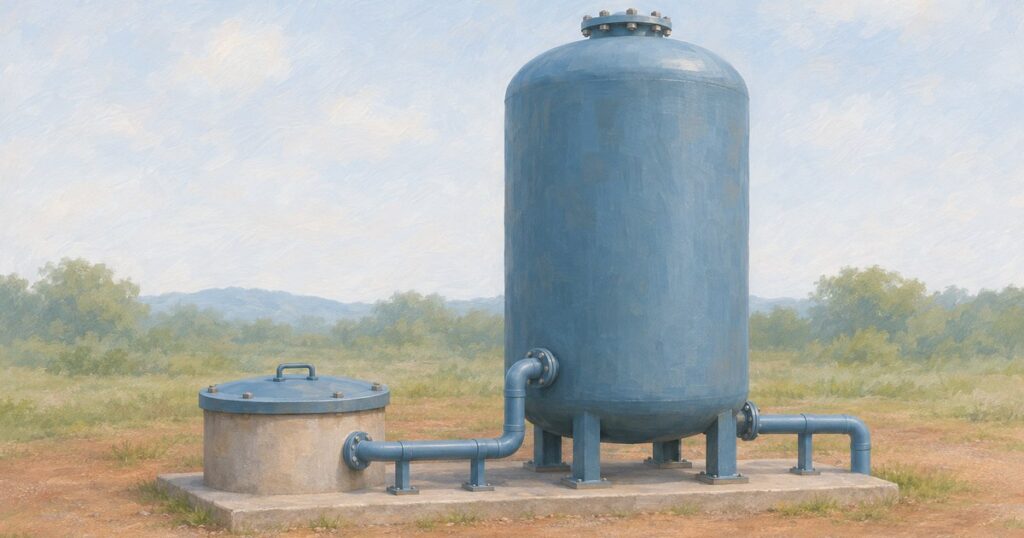
Yaphank Guide: Patchogue-Yaphank Road Well Field Grant
The post covers SCWA’s Yaphank well-field grant, one of three GAC treatment projects, and explains related water-quality records.
Fresh-tasting, clear water from every tap: a whole-home system designed to improve taste, odor and clarity, professionally installed and backed by a 10-year guarantee.
pHountain Water Filters provides whole-home (whole-house) water filtration solutions for Long Island homes. Installed where water enters the house, each system filters the water for every tap and shower through activated carbon, bone char and KDF media, and cleans itself with an automatic weekly backwash. An optional sediment pre-filter can be added before the main tank. Financing is available for eligible customers, subject to approval.
A local pHountain Water Filtration specialist tests your water at your home and explains the results, free and with no obligation. For homeowners in Nassau and Suffolk; the visit takes about 45 to 60 minutes.
Why Whole-Home Filtration
The whole-home system is designed to improve taste, odor and clarity, from the kitchen sink to the shower.
An automatic control valve backwashes the filtration media every week, and the main tank is cartridge-free: designed to be low-maintenance.
Every whole-home system includes an under-sink mineralizer for the kitchen drinking-water tap, a stage designed to add minerals to filtered drinking water.
Small, Medium and Large tanks, each sized for the home: your specialist can recommend a size at the free in-home water test.
Real Google reviews from families across Nassau and Suffolk Counties.
Customer Story
One homeowner’s whole-home installation, in their own words from a Google review.
Sediment in the home’s copper water lines.
“We were amazed at how much sediment was in our copper pipelines-gross!!”
A whole-home water filtration system, professionally installed.
“Our plumber Joe explained everything and was very knowledgeable about the product!”
Drinking water from the tap instead of plastic bottles.
“It’s a great feeling knowing we can drink water from the tap- no more plastic bottles! You can 100% taste the difference when drinking…”
K. C., 5-star Google review, February 2026. Excerpts quoted word for word; every home’s water is different, so results vary. Read the review on Google
Whole-home (whole-house) filtration with alkaline drinking-water options: reverse osmosis, a countertop water ionizer and an under-sink mineralizer for the kitchen tap.
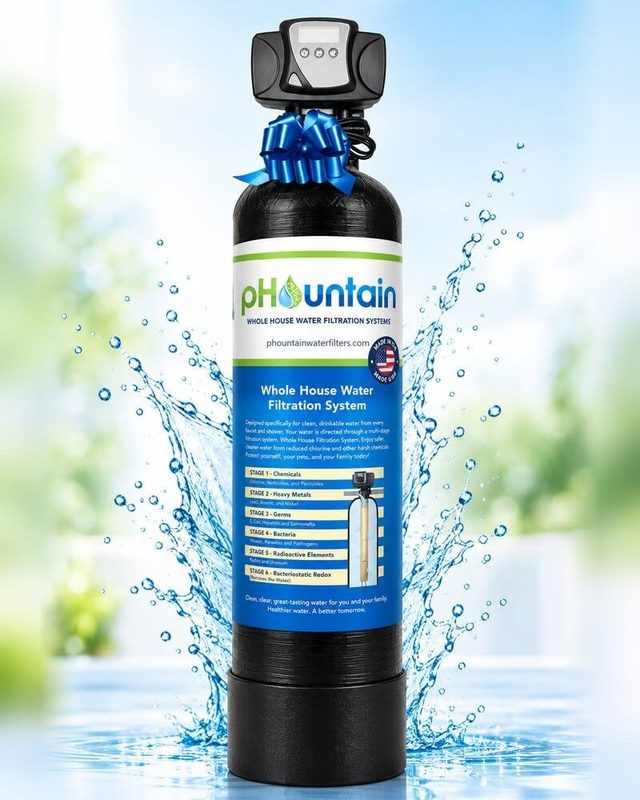
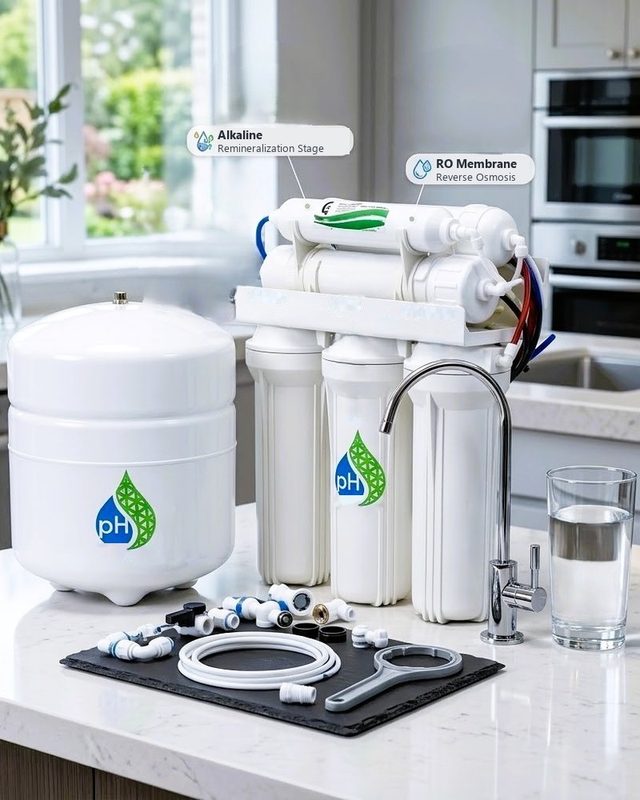
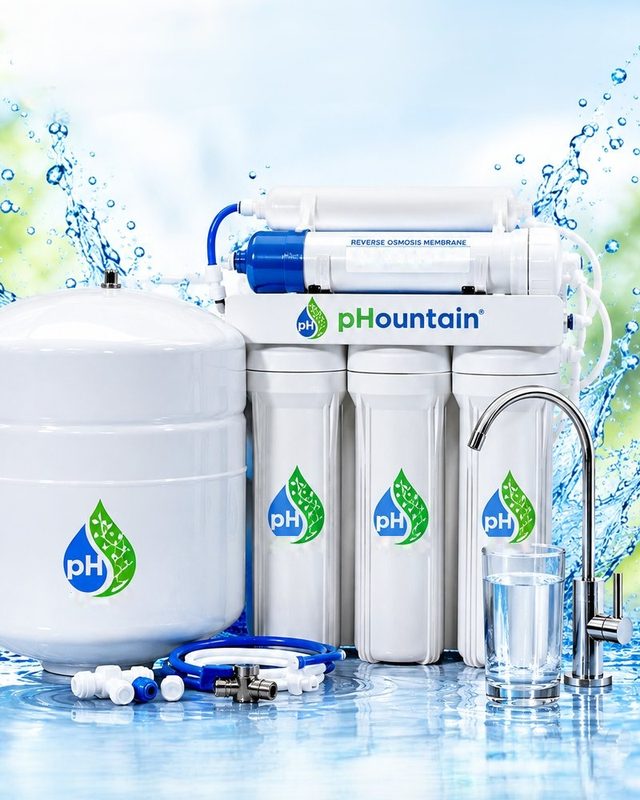
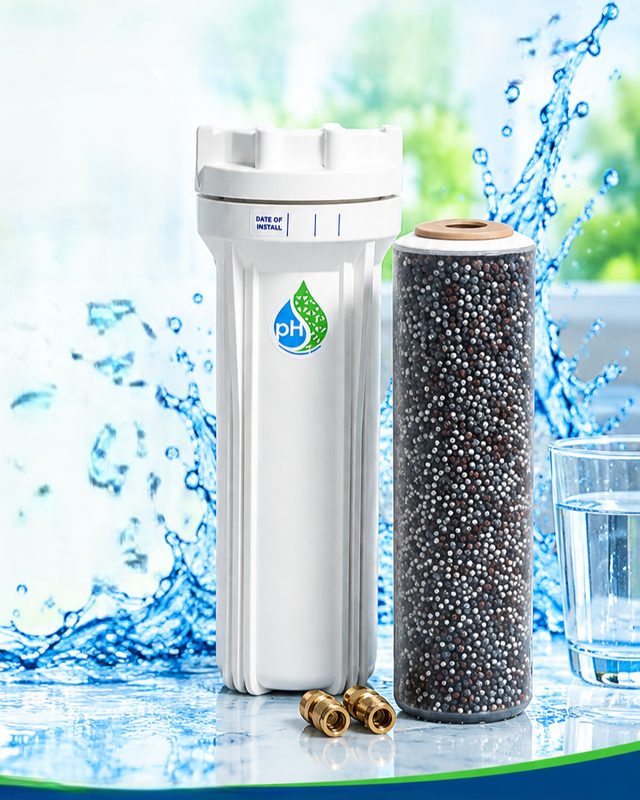
Also available: the 3-Stage under-sink water filter; for the whole-home system, a sediment pre-filter and a UV system as optional add-ons; and well water treatment.
Service Areas
Free in-home water testing and professional filtration installation throughout Nassau County and Suffolk County. Find your community below.
Western Long Island. Public water rules, your annual water quality report, and what regulators say about PFAS and disinfection byproducts.
Eastern Long Island. More than 360,000 cesspools and septic systems, private wells, and what regulators say about 1,4-dioxane, PFAS and nitrate.
Don’t see your town? We serve most communities across Nassau and Suffolk — call to confirm coverage for your address.
FAQ
A whole-home system (also called whole-house or point-of-entry) is installed on your main water line, so every faucet, shower, and appliance in the house gets filtered water, not just one tap. It is designed to improve taste, odor and clarity, and an optional sediment pre-filter can be added before the main tank. For any specific contaminant, ask for independent certification data (for example NSF/ANSI listings) for the exact system you are considering.
A whole-home (point-of-entry) system is installed on the main water line and treats the water that enters your home. A home reverse osmosis system is a point-of-use system: it treats the water for a single tap, such as the kitchen sink. pHountain Water Filtration's alkaline options are the Lifeguard Alkaline Reverse Osmosis System, which adds an alkaline remineralization stage after reverse osmosis, and the Aerus Elevate pH Max countertop water ionizer. Every whole-home system includes an under-sink mineralizer for the kitchen drinking-water tap, and reverse osmosis and the ionizer are offered as extras with the whole-home system. The drinking-water systems are sold by phone, and our specialists can help you decide what fits your home.
Cost depends on your home's size and whether you are on municipal or well water, so there is no one-size-fits-all price. After your free in-home water test, a specialist gives you transparent pricing with no obligation. Every installed whole-home system is backed by a 10-year guarantee.
Yes, it is completely free with no obligation. A local pHountain Water Filtration specialist comes to your home, tests your tap water, and explains the results in plain language. If your water warrants a system we will recommend one; if it tests clean, we will tell you that. Either way, the results are yours to keep.
A pHountain Water Filtration water specialist visits your home and tests your water on the spot: heavy metals, chlorine, pH, total dissolved solids, hardness and other parameters as applicable. The visit takes about 45 to 60 minutes, and the results are reviewed with you in person. Measuring PFAS and 1,4-dioxane at the levels regulators use requires analysis by a certified laboratory.
Yes. Well water and municipal supply call for different treatment approaches, and our specialists are trained for both. For a private well, ask about our well water treatment options, such as a sediment pre-filter or UV add-on. Private wells, common across parts of Suffolk County, are not covered by the drinking water limits that public suppliers must meet; EPA says “Private well owners are responsible for delivering safe drinking water to their households.”
Our systems are designed to be low-maintenance, and they are sized to protect your home's water pressure. On a whole-home system, an automatic control valve backwashes the filtration media every week and the main tank is cartridge-free; optional add-ons such as a sediment pre-filter or a UV system have parts replaced on a schedule. Depending on the system, upkeep may be as simple as an occasional filter change, and replacement filters are available in our online store. We walk you through the exact service schedule for your setup during installation.
It depends on the size of your home and household. The Medium tank is sized for homes of 500 to 2,000 square feet and families of up to 5, and the Large tank for homes of 1,500 to 4,000 square feet and families of 4 or more. For the Small tank, or a home over 4,000 square feet, ask which size fits; a specialist can recommend a tank size for your home at the free in-home water test.
Yes. The automatic control valve needs a standard outlet near the tank (it runs on 24 volts), and the weekly backwash needs a drain that meets local plumbing code. The system can be installed in homes on a septic system or cesspool; the installer confirms the drain connection. Water keeps flowing during a power outage, and the valve keeps its settings.
Water filtered by our whole-house systems tested slightly alkaline, pH 7.4 to 7.8, at an independent lab (one sample per system, March 2026). Neutral is 7, and the EPA's recommended range for drinking water is 6.5 to 8.5. Your result depends on your home's water, and the free in-home water test includes a pH check. For more alkaline drinking water, add the Aerus Elevate pH Max countertop ionizer (you choose the pH setting) or the Lifeguard Alkaline RO.
It's optional. A whole-house system filters the water for every tap, and every one includes an under-sink mineralizer for the kitchen drinking-water tap. Reverse osmosis and the Aerus Elevate pH Max countertop ionizer are offered as extras with the whole-home system, and your specialist can go over them during the free in-home water test.
Request a free in-home water test. A local specialist tests your water, walks you through the results, and recommends a system, with transparent pricing, only if you need one. There is no pressure and no obligation. Call 1-631-991-3995 or request your free test online. pHountain Water Filtration serves all of Long Island, in both Nassau County and Suffolk County.
Answers updated .
Know Your Water
Groundwater is the sole source of fresh water for Nassau and Suffolk Counties.[1] Public water systems treat it to meet federal and state drinking water standards and monitor its quality continuously.[2] Here is what those standards cover, how they apply to private wells, and where to read more.
New York has limited two PFAS chemicals, PFOA and PFOS, to 10 parts per trillion (ppt) in public water since 2020, and water above that level must be treated.[3] EPA’s national limit of 4.0 ppt for each was finalized in April 2024, with compliance due by 2029.[4] In May 2026, EPA proposed letting water systems request two more years, to 2031.[5] In June 2026, the New York State Legislature passed a bill to lower the state limits to 4 ppt; as of October 2026, it had not been signed into law.[6]
Our PFAS guideIn 2020, New York became the first state to set a drinking water limit for 1,4-dioxane: 1 part per billion.[3] Your supplier’s annual water quality report lists the regulated contaminants found in your water.[7]
Our 1,4-dioxane guideNew York’s environmental and health departments are overseeing the cleanup of the Navy Grumman groundwater plume in Bethpage; its main contaminant is the solvent TCE.[2] Their January 2026 update says the public water supplied to homes meets strict state drinking water standards and is safe to drink.[2]
Read our Bethpage plume articlePrivate wells aren’t regulated under the federal Safe Drinking Water Act, so well owners are responsible for their own water.[8] Suffolk County estimates 40,000 to 45,000 private wells serve over 200,000 people, and its health department runs a private well testing program.[9]
Our private well guideEPA’s limit for nitrate in public drinking water is 10 mg/L, measured as nitrogen; common sources include fertilizer runoff and leaking septic tanks.[10] Suffolk County notes that conventional septic systems were never designed to remove nitrogen, which eventually reaches groundwater, even inland.[11]
Nitrate, explainedLead can enter tap water when plumbing that contains lead corrodes; the most common sources are lead pipes, faucets and fixtures.[12] Where a lead service line connects a home to the water main, it is typically the biggest source, and lead pipes are more likely in homes built before 1986.[12]
Lead in drinking water, explainedIron above 0.3 mg/L can give water a rusty color and metallic taste, and manganese above 0.05 mg/L can turn it black or brown.[13] EPA sets these levels as non-mandatory guidelines for taste, color and odor, and at those levels they are not considered a risk to human health.[13]
Discolored water, explainedIs your home on public water? Your supplier must send you an annual drinking water quality report by July 1 each year.[7] For a closer look at the water in your home, request a free in-home water test: a local pHountain Water Filtration specialist tests your water and explains the results, with no pressure.
Request a Free Water Test How to read your water quality reportSources checked .
Local Water News
Practical, up-to-date reads on Long Island water quality, filtration technology, and what they mean for your home’s water.
The post covers SCWA’s Yaphank well-field grant, one of three GAC treatment projects, and explains related water-quality records.
Compare Hicksville water project figures by checking their scope, reporting periods, supporting documents and relationship to water quality reports.

Southold’s North Fork water main review outlines the findings decision, route selection, construction planning and remaining project steps.
Contact & Location
Based in Islip and serving homeowners across Long Island. Call, email, or stop by — we’re always happy to help.